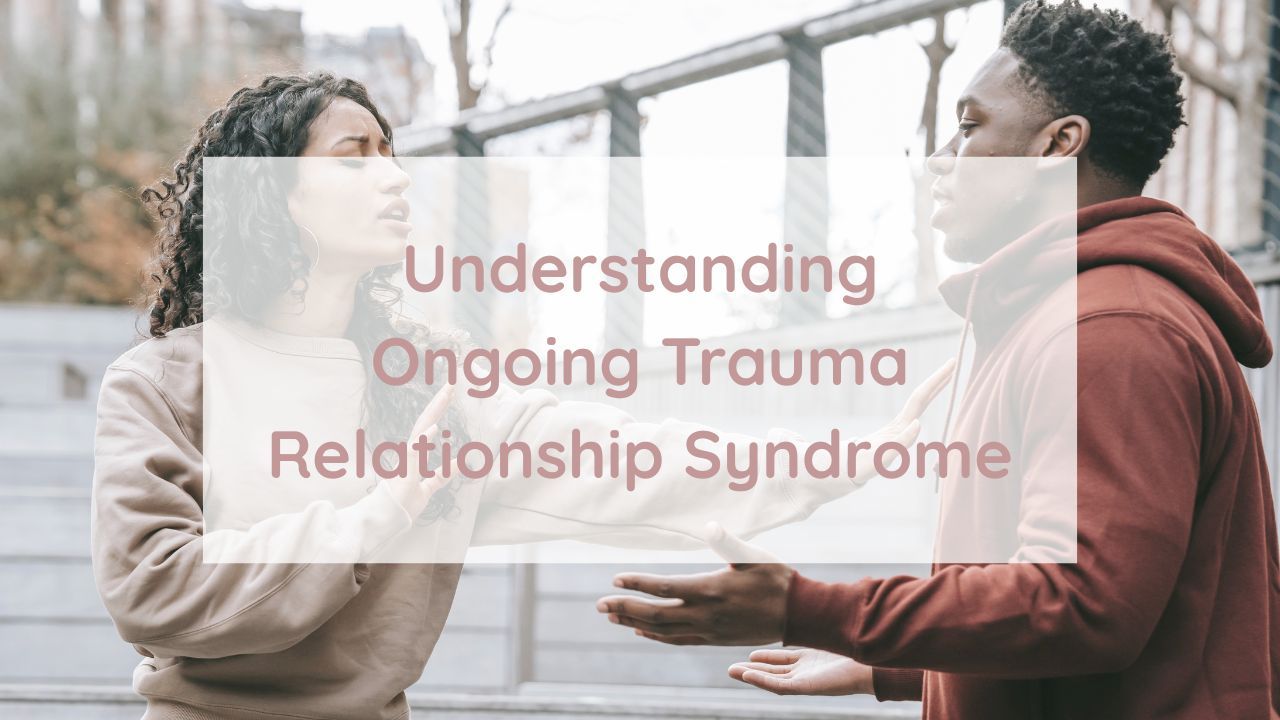
Understanding Ongoing Trauma Relationship Syndrome
What Is OTRS and Why Does It Matter?
Ongoing Trauma Relationship Syndrome (OTRS) is a pattern of distress that emerges when a person feels chronically unseen, unheard, and emotionally disconnected in a relationship. Unlike traditional trauma responses to singular events, OTRS is shaped by persistent emotional deprivation, miscommunication, and the slow erosion of one’s self-trust over time.
For those in relationships with partners who have high alexithymia, and are possibly on the spectrum with other neurodivergence. OTRS can develop as a response to the specific challenges of emotional expression, intimacy, and connection. High alexithymia means the partner struggles to identify and verbalise emotions, creating an experience of emotional “invisibility” for the neurotypical partner. When combined with other neurodivergence, this may result in a partner who is structured, logical, and functional in daily life, but seemingly detached or indifferent to emotional needs.
This guide explores OTRS through four key aspects to help you understand, validate, and navigate your experience:
- Emotional Invisibility & the Loss of Self
- The Trauma of Unmet Needs & Chronic Misattunement
- Communication Breakdown & the Body’s Response to Emotional Deprivation
- Healing, Growth, and a New Framework for Love
Living with OTRS feels like your soul is whispering into a void, constantly reaching for connection and never quite being held. You may feel unseen, as though you’re fading, not just in your partner’s eyes but in your own reflection. There’s a quiet ache, a sacred longing, a sense that your essence is starving for resonance. It’s not just emotional pain, it’s soul disorientation, a slow forgetting of your worth, until one day your soul cries, “Remember me, I’m worthy of loving too.”
EMOTIONAL INVISIBILITY & THE LOSS OF SELF
At the heart of OTRS is a profound sense of emotional invisibility. When your partner struggles to recognise emotions, not just yours, but often their own. You may feel like your emotions exist in a void, unheard and unacknowledged. Over time, this can lead to a quiet erosion of self-trust and even self-identity.
In relationships where emotions are not mirrored or reciprocated, you may experience:
- Doubt in your own emotions: Without external validation, you might question whether your feelings are “real” or “valid.”
- Emotional loneliness: Conversations may feel transactional, practical, or surface-level, leaving you craving deeper connection.
- Hyper-vigilance: You might overanalyse small actions, searching for emotional depth that seems absent.
- Shifting identity: To maintain harmony, you may suppress your emotions, adopting a role that prioritises your partner’s logic and structure over your own inner world.
This dynamic doesn’t mean your partner lacks love for you, it means they love differently, in a way that does not naturally align with traditional emotional reciprocity. Recognising this as a pattern rather than a personal failing is the first step towards healing.
THE TRAUMA OF UNMET NEEDS & CHRONIC MISATTUNEMENT
Chronic misattunement happens when your emotional cues are consistently missed or misunderstood. Unlike a neurodivergent partner who might struggle with social cues due to autism, ADHD, etc, A partner with high alexithymia experiences a disconnect from emotions themselves. They may not recognise distress in your voice, the significance of non-verbal cues, or even their own contribution to emotional pain.
This leads to:
- A pattern of emotional starvation: You might feel as though you are constantly pouring love and emotion into an “empty well,” receiving minimal emotional feedback.
- Emotional whiplash: Your partner may seem warm and engaged one moment but distant and detached the next, with no explanation.
- Repeated invalidation: If you express your pain, your partner may dismiss it, intellectualise it, or say they don’t understand why it matters.
- Accumulated grief: Over time, each moment of misattunement builds into a quiet, ongoing grief for the emotional connection you long for.
The nervous system interprets chronic misattunement as a threat, leading to symptoms of OTRS such as anxiety, emotional numbness, and even physical symptoms like headaches, fatigue, or digestive issues. Recognising this pattern is essential for reclaiming your emotional well-being.
COMMUNICATION BREAKDOWN & THE BODY’S RESPONSE TO EMOTIONAL DEPRIVATION
When emotional needs go unmet over time, the body stores the distress in ways that can manifest physically and psychologically. OTRS can cause:
- Hyperarousal (fight-or-flight response): Feeling constantly on edge, needing to “decode” your partner’s responses, or anticipating rejection.
- Shutdown (freeze response): Emotional numbness, dissociation, or feeling like you’re living in a relationship where you are “going through the motions.”
- Resentment and burnout: Feeling emotionally exhausted from carrying the emotional labour alone.
Additionally, communication can become:
- Logical but emotionally vacant: Your partner may engage in discussions that are structured and fact-based but lack warmth or validation.
- Defensive or avoidant: If your partner cannot emotionally process conflict, they may withdraw, leaving issues unresolved.
- Cyclic and unresolved: Repeating the same conversations with little change can make you feel like you are the only one “fighting” for the relationship.
Understanding your own nervous system response is key. By identifying when and how your body signals distress, you can begin creating strategies to regulate your emotional state and reclaim your power.
HEALING, GROWTH & A NEW FRAMEWORK FOR LOVE
Healing from OTRS does not require leaving the relationship, but it does require a shift in perspective and a new emotional framework. Steps towards healing include:
- Validating your emotions: Your feelings are real, even if your partner does not recognise or verbalise them.
- Creating external emotional support: Finding safe spaces (friends, therapy, journaling) to express and process emotions.
- Redefining intimacy: Shifting from emotional mirroring to other forms of connection, such as intellectual companionship, shared experiences, or structured emotional check-ins.
- Setting boundaries: Communicating clear and compassionate limits on what you can and cannot tolerate emotionally.
- Somatic and nervous system healing: Practices such as breathwork, movement, and self-soothing techniques can help regulate emotional distress.
Most importantly, healing means recognising that you are not broken, your emotions are not “too much,” and your pain is valid. Even in a relationship with high alexithymia, new forms of connection can emerge when both partners are open to understanding and adapting.
Embracing the Complexity of Love
OTRS is not a sign that you are weak, overly emotional, or incapable of love. It is a natural response to the experience of emotional invisibility and chronic misattunement. While your partner may never experience emotions the same way you do, healing comes from reclaiming your own emotional reality and recognising that love can exist even in relationships where emotions are expressed differently.
By understanding your patterns, advocating for your needs, and embracing alternative forms of connection, you can move from surviving the relationship to thriving within it.
Stay connected with news and updates!
Join our mailing list to receive the latest news and updates from our team.
Don't worry, your information will not be shared.
We hate SPAM. We will never sell your information, for any reason.